20 Mayıs 2020 Çarşamba

BIOLOGY OF COFFEE

BIOLOGY OF COFFEE

The traditional method of planting coffee is to place 20 seeds in each hole at the beginning of the rainy season. This method loses about 50% of the seeds' potential, as about half fail to sprout. A more effective process of growing coffee, used in Brazil, is to raise seedlings in nurseries that are then planted outside at six to twelve months. Coffee is often intercropped with food crops, such as cornbeans, or rice during the first few years of cultivation as farmers become familiar with its requirements.  Coffee plants grow within a defined area between the tropics of Cancer and Capricorn, termed the bean belt or coffee belt. 


Of the two main species grown, arabica coffee (from C. arabica) is generally more highly regarded than robusta coffee (from C. canephora). Robusta coffee tends to be bitter and have less flavor but better body than arabica. See the reputed OZSTAR nuts roasting machines http://www.ozstarmakina.com/en) If you are interested to start a coffee roastery you can look at the OZSTAR/TWINO Roasters which have the best economical coffee roasters (Please visit http://www.twinoroasters.com/ or http://www.ozstarmakina.com/en for roasters) along with other assesories such as grinder, destoners etc www.ozstarmakina.com  http://www.twinoroasters.com/ For these reasons, about three-quarters of coffee cultivated worldwide is C. arabica. Robusta strains also contain about 40–50% more caffeine than Arabica. 


Consequently, this species is used as an inexpensive substitute for arabica in many commercial coffee blends. Good quality robusta beans are used in traditional Italian espresso blends to provide a full-bodied taste and a better foam head (known as crema). Additionally, Coffee canephora is less susceptible to disease than C. arabica and can be cultivated in lower altitudes and warmer climates where C. arabica will not thrive.


See the reputed OZSTAR nuts roasting machines www.ozstarmakina.com)If you are interested to start a coffee roastery you can look at the OZSTAR/TWINO Roasters which have the best economical coffee roasters (Please visit http://www.ozstarmakina.com/en or http://www.ozstarmakina.com/en for roasters) along with other assesories such as grinder, destoners etc http://www.ozstarmakina.com/en  www.twinoroasters.com The robusta strain was first collected in 1890 from the Lomani River, a tributary of the Congo River, and was conveyed from the Congo Free State (now the Democratic Republic of the Congo) to Brussels to Java around 1900. From Java, further breeding resulted in the establishment of robusta plantations in many countries. In particular, the spread of the devastating coffee leaf rust (Hemileia vastatrix), to which C. arabica is vulnerable, hastened the uptake of the resistant robusta. Hemileia vastatrix is a fungal pathogen and results in light, rust-colored spots on the undersides of coffee plant leaves. Hemileia vastatrix grows exclusively on the leaves of coffee pants.Coffee leaf rust is found in virtually all countries that produce coffee.


BIOLOGY OF COFFEE

BIOLOGY OF COFFEE 

Coffee arabica is predominantly self-pollinating, and as a result, the seedlings are generally uniform and vary little from their parents. In contrast, Coffee canephora, and C. liberica are self-incompatible and require outcrossing. This means that useful forms and hybrids must be propagated vegetatively. Cuttings, grafting, and budding are the usual methods of vegetative propagation. On the other hand, there is great scope for experimentation in search of potential new strains.


(See the reputed OZSTAR nuts roasting machines www.ozstarmakina.com)If you are interested to start a coffee roastery you can look at the OZSTAR/TWINO Roasters which have the best economical coffee roasters (Please visit http://www.twinoroasters.com/ or www.ozstarmakina.com for roasters) along with other accessories such as grinder, destoners etc www.ozstarmakina.com  www.twinoroasters.com


 (See the reputed OZSTAR nuts roasting machines www.ozstarmakina.com)If you are interested to start a coffee roastery you can look at the OZSTAR/TWINO Roasters which have the best economical coffee roasters (Please visit http://www.twinoroasters.com/ or www.ozstarmakina.com for roasters) along with other accessories such as grinder, destoners etc www.ozstarmakina.com  www.twinoroasters.com


In 2016, Oregon State University entomologist George Poinar, Jr. announced the discovery of a new plant species, which is a 45-million-year-old relative of coffee found in amber. Named Strychnos electri, after the Greek word for amber (electron), the flowers represent the first-ever fossils of an asterid, which is a clade of flowering plants that not only later gave us coffee, but also sunflowers, peppers, potatoes, mint – and deadly poisons. (See the reputed OZSTAR nuts roasting machines www.ozstarmakina.com)If you are interested to start a coffee roastery you can look at the OZSTAR/TWINO Roasters which have the best economical coffee roasters (Please visit http://www.twinoroasters.com/ or www.ozstarmakina.com for roasters) along with other assesories such as grinder, destoners etc http://www.ozstarmakina.com/en/  http://www.twinoroasters.com/ (See the reputed OZSTAR nuts roasting machines http://www.ozstarmakina.com/en/) If you are interested to start a coffee roastery you can look at the OZSTAR/TWINO Roasters which have the best economical coffee roasters (Please visit http://www.twinoroasters.com/ or http://www.ozstarmakina.com/en for roasters) along with other assesories such as grinder, destoners etc http://www.ozstarmakina.com/en  www.twinoroasters.com


BIOLOGY OF COFFEE

BIOLOGY OF COFFEE

Several species of shrub of the genus Coffea produce the berries from which coffee is extracted. The two main species commercially cultivated are Coffea canephora (predominantly a form known as 'robusta') and C. arabica. C. arabica, the most highly regarded species, is native to the southwestern highlands of Ethiopia and the Boma Plateau in southeastern Sudan and Mount Marsabit in northern Kenya. C. canephora is native to western and central Subsaharan Africa, from Guinea to Uganda and southern Sudan. Less popular species are C. liberica, C. stenophylla, C. mauritiana, and C. racemosa. (See the reputed OZSTAR nuts roasting machines https://www.ozstarmakina.com/en)

If you are interested to start a coffee roastery you can look at the OZSTAR/TWINO Roasters which have the best economical coffee roasters (Please visit www.twino roasters or https://www.ozstarmakina.com/en for roasters) along with other assesories such as grinder, destoners etc https://www.ozstarmakina.com/en  www.twinoroasters.com


All coffee plants are classified in the large family Rubiaceae. They are evergreen shrubs or trees that may grow 5 m (15 ft) tall when unpruned. The leaves are dark green and glossy, usually 10–15 cm (4–6 in) long and 6 cm (2.4 in) wide, simple, entire, and opposite. Petioles of opposite leaves fuse at the base to form interpetiolar stipules, characteristic of Rubiaceae. The flowers are axillary, and clusters of fragrant white flowers bloom simultaneously. (See the reputed OZSTAR nuts roasting machines https://www.ozstarmakina.com/en) If you are interested to start a coffee roastery you can look at the OZSTAR/TWINO Roasters which have the best economical coffee roasters (Please visit http://www.twinoroasters.com/or www.ozstarmakina.com for roasters) along with other assesories such as grinder, destoners etc https://www.ozstarmakina.com/en  www.twinoroasters.com


Gynoecium consists of an inferior ovary, also characteristic of Rubiaceae. The flowers are followed by oval berries of about 1.5 cm (0.6 in). When immature they are green, and they ripen to yellow, then crimson, before turning black on drying. Each berry usually contains two seeds, but 5–10% of the berries have only one; these are called peaberries. Arabica berries ripen in six to eight months, while robusta takes nine to eleven months. 


(See the reputed OZSTAR nuts roasting machines https://www.ozstarmakina.com/en) If you are interested to start a coffee roastery you can look at the OZSTAR/TWINO Roasters which have the best economical coffee roasters (Please visit http://www.twinoroasters.com or www.ozstarmakina.com for roasters[HD1] ) along with other assesories such as grinder, destoners etc www.ozstarmakina.com  http://www.twinoroasters.com


Coffee History and Transmission

Rapid growth in coffee production in South America during the second half of the 19th century was matched by growth in consumption in developed countries, though nowhere has this growth been as pronounced as in the United States, where a high rate of population growth was compounded by doubling of per capita consumption between 1860 and 1920. (See the reputed OZSTAR nuts roasting machines https://www.ozstarmakina.com/en)


If you are interested to start a coffee roastery you can look at the OZSTAR[HD1] /TWINO Roasters which have the best economical coffee roasters (Please visit http://www.twinoroasters.com  or https://www.ozstarmakina.com/en  for roasters) along with other assesories such as grinder, destoners etc www.ozstarmakina.com  www.twinoroasters.com

Though the United States was not the heaviest coffee-drinking nation at the time (Nordic countries, Belgium, and Netherlands all had comparable or higher levels of per capita consumption), due to its sheer size, it was already the largest consumer of coffee in the world by 1860, and, by 1920, around half of all coffee produced worldwide was consumed in the US. (See the reputed OZSTAR nuts roasting machines https://www.ozstarmakina.com/en)


If you are interested to start a coffee roastery you can look at the OZSTAR/TWINO Roasters which have the best economical coffee roasters (Please visit http://www.twinoroasters.com  or https://www.ozstarmakina.com/en for roasters) along with other assesories such as grinder, destoners etc https://www.ozstarmakina.com/en  http://www.twinoroasters.com

Coffee has become a vital cash crop for many developing countries. Over one hundred million people in developing countries have become dependent on coffee as their primary source of income. It has become the primary export and backbone for African countries like Uganda, Burundi, Rwanda, and Ethiopia, as well as many Central American countries. (See the reputed OZSTAR nuts roasting machines https://www.ozstarmakina.com/en)


If you are interested to start a coffee roastery you can look at the https://www.ozstarmakina.com/en OZSTAR/TWINO Roasters which have the best economical coffee roasters (Please visit http://www.twinoroasters.com or www. ozstarmakina.com for roasters) along with other assesories such as grinder, destoners etc https://www.ozstarmakina.com/en  www.twinoroasters.com


 [HD1]


COFEEE HISTORY AND TRANSMISSION

COFEEE HISTORY AND TRANSMISSION


The Frenchman Gabriel de Clieu took a coffee plant to the French territory of Martinique in the Caribbean in the 1720s, from which much of the world’s cultivated arabica coffee is descended. Coffee thrived in the climate and was conveyed across the Americas. Coffee3

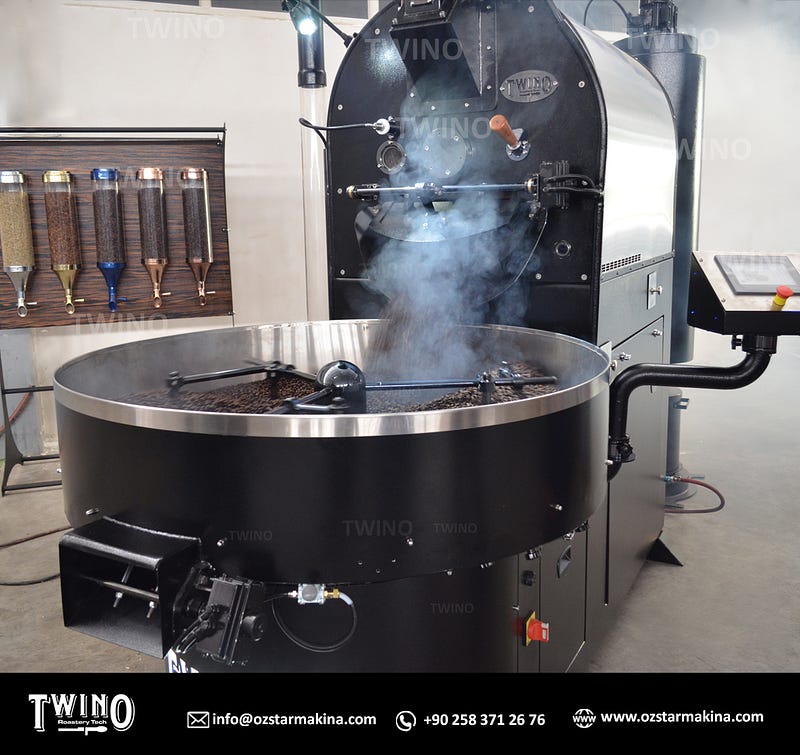
Coffee roasting machine

was cultivated in Saint-Domingue (now Haiti) from 1734, and by 1788 it supplied half the world’s coffee.The conditions that the slaves worked in on coffee plantations were a factor in the soon to follow Haitian Revolution. The coffee industry never fully recovered there.It made a brief come-back in 1949 when Haiti was the world’s 3rd largest coffee exporter, but fell quickly into rapid decline.

(See the reputed OZSTAR nuts roasting machines https://www.ozstarmakina.com/en)

If you are interested to start a coffee roastery you can look at the OZSTAR/TWINO Roasters which have the best economical coffee roasters (Please visit http://www.twinoroasters.com or https://www.ozstarmakina.com/en for roasters) along with other assesories such as grinder, destoners etc www.ozstarmakina.com http://www.twinoroasters.com

(See the reputed OZSTAR nuts roasting machines https://www.ozstarmakina.com/en)

coffee beans roasting machine

Meanwhile, coffee had been introduced to Brazil in 1727, although its cultivation did not gather momentum until independence in 1822.After this time massive tracts of rainforest were cleared for coffee plantations, first in the vicinity of Rio de Janeiro and later São Paulo.Brazil went from having essentially no coffee exports in 1800, to being a significant regional producer in 1830, to being the largest producer in the world by 1852. In 1910–20, Brazil exported around 70% of the world’s coffee, Colombia, Guatemala, and Venezuela, exported half of the remaining 30%, and Old World production accounted for less than 5% of world exports. Cultivation was taken up by many countries in Central America in the latter half of the 19th century, and almost all involved the large-scale displacement and exploitation of the indigenous people. Harsh conditions led to many uprisings, coups and bloody suppression of peasants. The notable exception was Costa Rica, where lack of ready labor prevented the formation of large farms. Smaller farms and more egalitarian conditions ameliorated unrest over the 19th and 20th centuries. (See the reputed OZSTAR nuts roasting machines www.ozstarmakina.com) If you are interested to start a coffee roastery you can look at the OZSTAR/TWINO Roasters which have the best economical coffee roasters (Please visit http://www.twinoroasters.com or https://www.ozstarmakina.com/en for roasters) along with other assesories such as grinder, destoners etc www.ozstarmakina.com www.twinoroasters.com

19 Mayıs 2020 Salı

Coffee Roasting Machine Ozstar Nuts Roasters

COFEEE HISTORY PART 5

Through the efforts of the British East India Company, coffee became popular in England as well. John Evelyn recorded tasting the drink at Oxford in England in a diary entry of May 1637 to where it had been brought by an Ottoman student of Balliol College from Crete named Nathaniel Conopios of Crete. Oxford's Queen's Lane Coffee House, established in 1654, is still in existence today. Coffee was introduced in France in 1657, and in Austria and Poland after the 1683 Battle of Vienna, when coffee was captured from supplies of the defeated Turks.


(See the reputed OZSTAR nuts roasting machines http://www.ozstarmakina.com/en)

If you are interested to start a coffee roastery you can look at the OZSTAR/TWINO Roasters which have the best economical coffee roasters (Please visit http://www.twinoroasters.com/ or http://www.ozstarmakina.com/enfor roasters) along with other assesories such as grinder, destoners etc www.ozstarmakina.com  www.twinoroasters.com

When coffee reached North America during the Colonial period, it was initially not as successful as it had been in Europe as alcoholic beverages remained more popular. During the Revolutionary War, the demand for coffee increased so much that dealers had to hoard their scarce supplies and raise prices dramatically; this was also due to the reduced availability of tea from British merchants,and a general resolution among many Americans to avoid drinking tea following the 1773 Boston Tea Party. After the War of 1812, during which Britain temporarily cut off access to tea imports, the Americans' taste for coffee grew.


During the 18th century, coffee consumption declined in England, giving way to tea-drinking. The latter beverage was simpler to make, and had become cheaper with the British conquest of India and the tea industry there. During the Age of Sailseamen aboard ships of the British Royal Navy made substitute coffee by dissolving burnt bread in hot water.


(See the reputed OZSTAR nuts roasting machines http://www.ozstarmakina.com/en)

If you are interested to start a coffee roastery you can look at the OZSTAR/TWINO Roasters which have the best economical coffee roasters (Please visit http://www.twinoroasters.com/ or http://www.ozstarmakina.com/en for roasters) along with other assesories such as grinder, destoners etc www.ozstarmakina.com  www.twinoroasters.com


Coffee Roasters Ozstar Nuts Roasting Machine

COFEEE HISTORY 

By the 16th century, coffee had reached the rest of the Middle East, PersiaTurkey, and northern Africa. The first coffee seeds were smuggled out of the Middle East by Sufi Baba Budan from Yemen to the Indian subcontinent in 1670. Before then, all exported coffee was boiled or otherwise sterilised. Portraits of Baba Budan depict him as having smuggled seven coffee seeds by strapping them to his chest. The first plants grown from these smuggled seeds were planted in Mysore. Coffee had spread to Italy by 1600, and then to the rest of Europe, Indonesia, and the Americas. The first instant coffee was invented by inventor George Washington in 1909. In 1583, Leonhard Rauwolf, a German physician, gave this description of coffee after returning from a ten-year trip to the Near East: A beverage as black as ink, useful against numerous illnesses, particularly those of the stomach. Its consumers take it in the morning, quite frankly, in a porcelain cup that is passed around and from which each one drinks a cupful. It is composed of water and the fruit from a bush called bunnu.


— Léonard Rauwolf, Reise in die Morgenländer (in German)

(See the reputed OZSTAR nuts roasting machines http://www.ozstarmakina.com/en)

If you are interested to start a coffee roastery you can look at the OZSTAR/TWINO Roasters which have the best economical coffee roasters (Please visit www. Twino roasters or http://www.ozstarmakina.com/enfor roasters) along with other assesories such as grinder, destoners etc http://www.ozstarmakina.com/en  www.twinoroasters.com


The thriving trade between Venice and North Africa, Egypt, and the Middle East (back then Ottoman Empire), brought many goods, including coffee, to the Venetian port. From Venice, it was introduced to the rest of Europe. Coffee became more widely accepted after it was deemed a Christian beverage by Pope Clement VIII in 1600, despite appeals to ban the "Muslim drink." The first European coffee house opened in Rome in 1645. A coffee can from the first half of the 20th century. From the Museo del Objeto del Objeto collection.The Dutch East India Company was the first to import coffee on a large scale.The Dutch later grew the crop in Java and Ceylon. The first exports of Indonesian coffee from Java to the Netherlands occurred in 1711.


(See the reputed OZSTAR nuts roasting machines http://www.ozstarmakina.com/en)

If you are interested to start a coffee roastery you can look at the OZSTAR/TWINO Roasters which have the best economical coffee roasters (Please visit www.twino roasters or http://www.ozstarmakina.com/en for roasters) along with other assesories such as grinder, destoners etc http://www.ozstarmakina.com/en  http://www.twinoroasters.com/


Coffee Roasting Machine Ozstar Nuts Roasting Machine

COFEEE HISTORY

The earliest credible evidence of coffee-drinking or knowledge of the coffee tree appears in the middle of the 15th century in the accounts of Ahmed al-Ghaffar in Yemen.  It was here in Arabia that coffee seeds were first roasted and brewed, in a similar way to how it is prepared now. Coffee was used by Sufi circles to stay awake for their religious rituals. Accounts differ on the origin of the coffee plant prior to its appearance in Yemen. From Ethiopia, coffee could have been introduced to Yemen via trade across the Red Sea.One account credits Muhammad Ibn Sa'd for bringing the beverage to Aden from the African coast. 


Other early accounts say Ali ben Omar of the Shadhili Sufi order was the first to introduce coffee to Arabia.] According to al Shardi, Ali ben Omar may have encountered coffee during his stay with the Adal king Sadadin's companions in 1401. Famous 16th-century Islamic scholar Ibn Hajar al-Haytami notes in his writings of a beverage called qahwa developed from a tree in the Zeila region.Coffee was first exported out of Ethiopia to Yemen by Somali merchants from Berbera and Zeila, which was procured form Harar and the Abyssinian interior. According to Captain Haines, who was the colonial administrator of Aden (1839-1854), Mocha historically imported up to two-thirds of their coffee from Berbera-based merchants before the coffee trade of Mocha was captured by British-controlled Aden in the 19th century. Thereafter, much of the Ethiopian coffee was exported to Aden via Berbera.


Berbera not only supplies Aden with horned cattle and sheep to a very large extent, but the trade between Africa and Aden is steadily increasing greatly every year. In the article of coffee alone there is considerable export, and ' Berbera' coffee stands in the Bombay market now before Mocha. The coffee shipped at Berbera comes from far in the interior from Hurrar, Abyssinia, and Kaffa. It will be to the advantage of all that the trade should come to Aden through one port, and Berbera is the only place on the coast there that has a protected port, where vessels can lie in smooth water.


(See the reputed OZSTAR nuts roasting machines http://www.ozstarmakina.com/en)

If you are interested to start a coffee roastery you can look at the OZSTAR/TWINO Roasters which have the best economical coffee roasters (Please visit http://www.twinoroasters.com/ or http://www.ozstarmakina.com/en for roasters) along with other assesories such as grinder, destoners etc http://www.ozstarmakina.com/en  http://www.twinoroasters.com/